The FDA: Health Focused or Money Focused?
Make America Healthy Again! How could this movement go unnoticed? Today, over 40% of the children in the United States are battling at least one chronic disease, which is a major increase from past years (President’s Make America Healthy Again Commission 9). The Food and Drug Administration (FDA) is responsible for the “safety, efficacy, and security” of food and drugs (Sekeres). Established in 1906, the FDA has a broad range of responsibilities, including pre-market approval, post-market assessment, registration and licensing, policies, and guidance for all foods and drugs (Wang and Wertheimer). However, recent findings offer questions about the reliability of this organization and whether it is making unbiased decisions. Some turn to the Centers of Disease Control (CDC) for the illness of the people, while others blame the FDA for establishing the disease in our bodies. Therefore, two theories have surfaced:
-
The FDA is doing right by our health and giving us reliable information.
-
The FDA is influenced by money, affecting the outcome of their statements.
To truly understand, let’s take a deep dive into the findings and reveal how likely it is that FDA statements are money driven.
_(6923358557).jpg)
Character Analysis
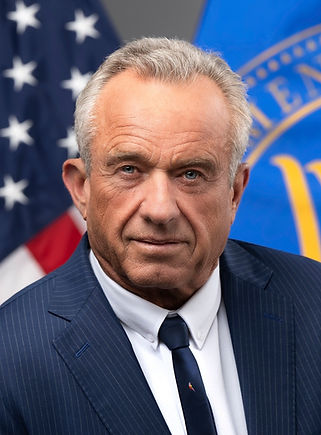
Why is Robert F. Kennedy Jr. significant? He separates himself not only for his academic intelligence, but also for his courage in advocating for his causes. As a Harvard graduate and well-known author, Kennedy has demonstrated a life guided by intellect (Kennedy “Take America Back” 201). Along with that, Kennedy reveals courage in his career that most people are unwilling to show, as he is an “international model in stakeholder consensus negotiations and sustainable development” (Illinois State University Report 1). In attaining this, he has utilized his intelligence and boldness to combat numerous environmental hazards.
Despite a distant childhood while his father pursued the presidency, Robert F. Kennedy Jr. grew into a remarkably intelligent man (Oppenheimer). Kennedy informed journalist Peter Kahlan about an IQ test he had voluntarily taken (Oppenheimer 14). Kahlan was amazed by the results, stating, “it was, he boasted, off the charts, placing him, he claimed, in the brilliant range” (14). Kennedy continues to keep his score a secret (14). Beyond his supposed outstanding IQ score, Kennedy has achieved notable scholarly success. In one of his Keynote Address speech documents, it explains, “Robert F Kennedy Jr. is a graduate of Harvard University. He studied at London School of Economics and received his law degree from the University of Virginia Law School” (Kennedy “Take America Back” 201). He has also written numerous books on various subjects, including The Riverkeepers, Limited Boxed Set, and Crimes Against Nature (Kennedy, Limited Boxed Set; Kennedy “Take America Back” 201).
_(cropped_3-4).jpg)
Furthermore, one Illinois State University report claims, “his articles have appeared in the New York Times, the Washington Post, the Los Angeles Times, the Wall Street Journal, Newsweek, Rolling Stone, Atlantic Monthly, Esquire, The Nation, Outside magazine, the Village Voice and many other publications” (1). Throughout his life, Robert F. Kennedy Jr. has achieved high-ranking educational accomplishments, proving he is a very smart person.
Robert F. Kennedy Jr. shows immense courage in environmental health activism, which displays the passion he has for his viewpoint. Throughout his career, Kennedy has been found “prosecuting governments and companies for polluting the Hudson River and Long Island Sound; winning settlements for the Hudson Riverkeeper; arguing cases to expand citizen access to the shoreline; and suing sewage treatment plants to force compliance with the Clean Water Act” (Kennedy “Environmental Destiny”). This demonstrates his lack of fear in the face of opposition. Perhaps his greatest example of courage was with the Riverkeeper organization. The Illinois State University Report claimed, “he was named one of Time magazine’s “Heroes for the Planet” for his success in helping the Riverkeeper organization lead the fight to restore the Hudson River in New York” (1). Within the lawsuits involved, Kennedy and his team challenged governmental agencies and large corporations that they proved were responsible for polluting the river (Kennedy “Culture of Mismanagement”). This demonstrates remarkable courage in the face of powerful corporate entities. Together, these efforts prove that Kennedy is a bold leader when it comes to advocating for his beliefs.
Based on this research, it is plausible to conclude that Robert F. Kennedy Jr. has reached milestones that surpass an average person’s life. Robert F. Kennedy Jr. has an incredibly smart and complex mind. However, his intelligence is not the only aspect that fuels his success, he also displays immense courage in pushing for the advancement of his causes. These traits enhance his argument to those who oppose him, especially in upcoming matters.

Photo: CVCTforum, “Cvct-2-688.jpg”, via Wikimedia Commons — licensed under CC BY-SA 4.0 (https://creativecommons.org/licenses/by-sa/4.0/)
Rhetorical Analysis
Two theories about the FDA have surfaced. Is the FDA doing right by our health? Or, is the FDA influenced by money, therefore affecting their statements? Let’s evaluate these conspiracies and see which is the most plausible conclusion.
The first theory is that the FDA is a completely reliable agency. Dr. Robert Califf, FDA commissioner from 2022 to 2025, states that the FDA is committed to “helping the public get accurate, science-based information they need to use medical products and foods to maintain and improve their health” (United States, Congress, House, 1). The FDA has a broad range of responsibilities, but its main focus is keeping Americans safe through food and drugs while embracing “gold-standard science” and “radical transparency" (Makary). These statements give the public a sense of comfort in their mission to prioritize health. Each year, the FDA is responsible for regulating products valued at one trillion dollars (Sekeres). Large financial oversight inevitably inspires public confidence in the agency. However, what if these confident statements prove to be their downfall?

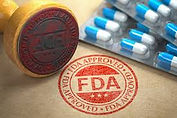
The general belief that the FDA fully safeguards against all hazardous foods and drugs is widely accepted. However, medical doctor and professor Mikkael A. Sekeres makes a compelling argument: “Because of the confidence we place in the agency, we have the luxury of ignoring the complicated labels and package inserts” (Sekeres). This reveals that they understand the blind trust we place in the agency. The FDA may regulate foods and drugs across America, but recent findings suggest that they lack transparency in their scientific procedures (Huntoon 34). Lawrence R. Huntoon states, “Science and medicine depend heavily on transparency, and without it, negative consequences are inevitable” (34). It has been found that over half of the clinical trials used to support approval of substances within the FDA are left unpublished within five years (Huntoon 34). Additionally, there have been instances in which “violations warranted exclusion of the entire trial from regulatory assessment” (Huntoon 34). This raises questions about what crucial findings the agency is hiding. One cannot determine the full effects of a food or drug, given that the majority of the research is hidden. Therefore, it would be logical to conclude that this creates a lack of safety and trust within the organization. Based on the absence of transparency, it is inaccurate to conclude that the FDA is always focused on health over all other considerations.
The second theory is that the FDA is money-driven. The book Plague of Corruption states, “Science, at its best, is a search for existential truth. Sometimes, however, those truths threaten powerful economic paradigms” (Mikovits and Heckenlively). This statement poses a question about the ethical conduct of the FDA. Throughout this book, it explains how the FDA has isolated, silenced, and dismissed individuals from the agency (including-well respected doctors and scientists) who voiced opposition to certain drugs (Mikovits and Heckenlively). For example, when their leading epidemiologist at the time, Dr. Bart Classen, revealed startling results showing an association between the Hib vaccine and Type 1 diabetes, the FDA was deeply alarmed (Mikovits and Heckenlively). They demanded that Classen “refrain from publishing the government-funded studies, forbade him from talking publicly about the alarming outbreak, and eventually forced him out of government service” (Mikovits and Heckenlively). The FDA claimed he had inaccurate proof, even though his proof was being suppressed. This indicates a severe lack of transparency to the public around all further research. But why are they doing this?
To further support the idea that the FDA is revenue focused, it is important to understand why they resist opposition. Dr. Robert Califf proposed that the “FDA guides and oversees industry to help ensure that Americans can have confidence about the medical, food, and cosmetic products they are using” (United States, Congress, House, 1). However, given that his salary is directly supplied by the organization he oversees, it is rational to question the validity of his statements. Former FDA inspector Massoud Motamed mentions that “it would surprise Americans how much we rely on the manufacturer and whatever they tell us to say that a drug is good or bad” (Huntoon 36). The Milbank Quarterly Journal conducted a study that questioned members at 379 FDA meetings and “reported financial interests of 1,379 FDA advisory committee members” (Pham‐Kanter). In another study of thirty-eight experts and doctors who spoke at similar meetings, about half had payments from the sponsoring company, and ninety-one percent received pharmaceutical industry payments (Lammers et al.). One accumulated “payment in excess of $2 million” (Lammers et al.). As a result,
Photo: Sinncronize, “Fda_Stamp.jpg”, via Wikimedia Commons — licensed under CC BY-SA 4.0 (https://creativecommons.org/licenses/by-sa/4.0/)
federal policy is undermined, and officials vote in ways that may not be backed by their unbiased statements. But, what is the pharmaceutical motive to engage in financial conflicts with the FDA? Drugs that are endorsed by trusted FDA officials are more likely to produce an immensely profitable result; many of which exceed “$1 billion in their first years on the market” (Whittaker and Gotzsche 1). This close tie presents a major financial gain for both parties. Furthermore, another study suggests that, “among FDA staff, subsequent employment in the biopharmaceutical industry is prevalent” (Lammers et al.). This means that many FDA staff members go on to join the same industry they once regulated, which would indicate that they were more favorable to the pharmaceutical companies while they still worked for the FDA. Robert F. Kennedy Jr. explains this situation as having a “soft landing” in their emerging pharmaceutical careers (Brecka). This evidence concludes that FDA statements are not science based – the organization and their members are financially driven.
The FDA remains the leading regulatory agency for food and drugs. In the future, Robert F. Kennedy Jr. will work to reform the FDA as Secretary of Health and Human Services. Hopefully, he will amend it to become the gold-standard regulatory agency that America needs.
Conclusion
The FDA continues to serve as the leading regulatory agency overseeing food and pharmaceuticals for American citizens. They are tasked with obtaining objective health guidance and complete transparency. However, several individuals, such as Robert F. Kennedy Jr., have publicly voiced their discontent with the decisions they have made and question the safety of American health in their hands (Kennedy). We have explored why Kennedy’s concerns deserve consideration and his demonstration of intelligence and courage support why his perspective is credible. Meanwhile, two questions surface: Is the FDA completely responsible with American health? Are they easily influenced by money? Based on the lack of transparency within the research, the documented financial conflicts of interest, and the close ties with the pharmaceutical industry, it is logical to conclude Kennedy is accurate in his statements and the FDA is money-focused. The FDA’s decisions have a direct impact on the safety of American foods and drugs. This demonstrates the importance of debate and reform efforts pushed by individuals like Robert F. Kennedy Jr. and promotes a greater awareness for accountability and transparency in government health organizations.